
How We Collect Shells Without Harming the Beach
Empty shells are homes, shelters and building material for the beach ecosystem. Here is exactly how we collect, when, and the rules we never break.
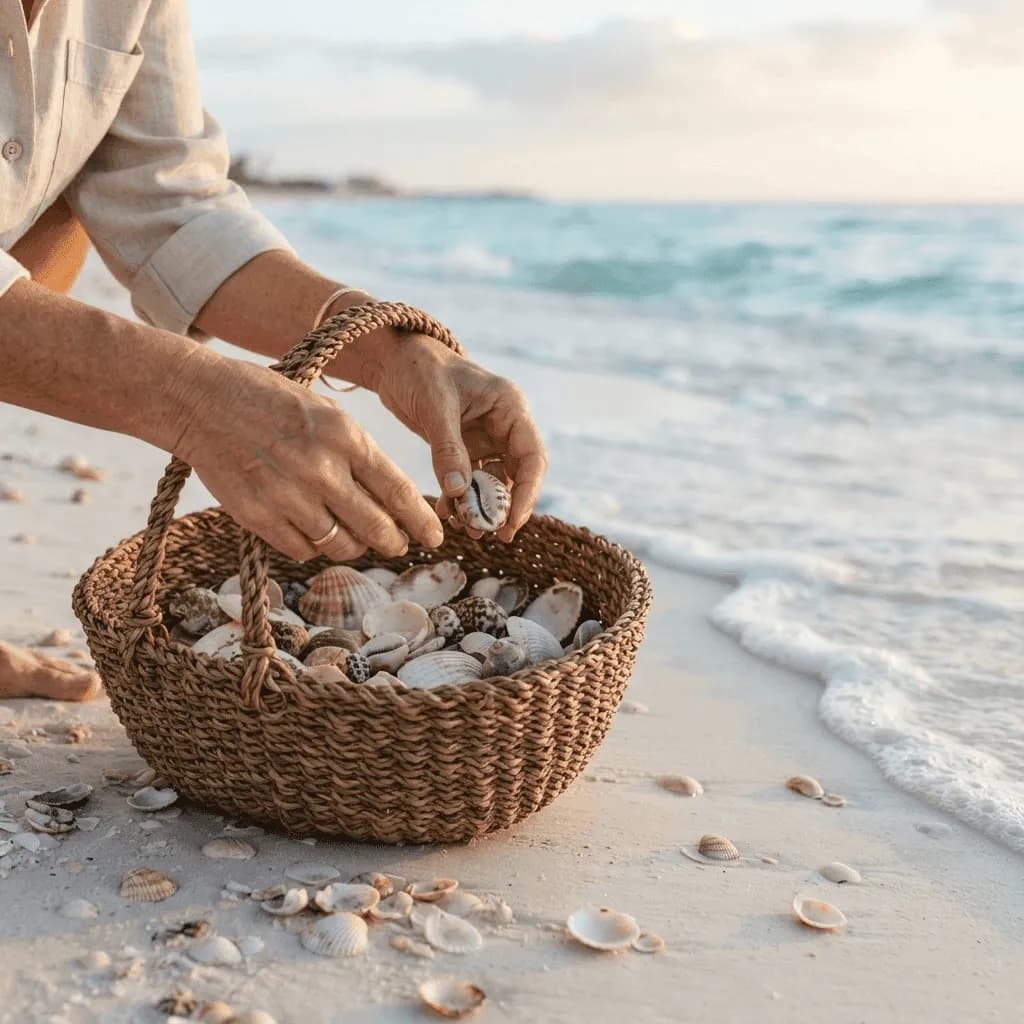
Every shell in our studio started its life as someone’s home. That simple fact shapes everything about how we gather — and it is why we are careful to collect only what the tide has already finished with.
Only the dead and the empty
We collect exclusively empty shells, and only ones we can be sure are empty: no hermit crabs hiding in the whorl, no living animal clinging to the lip. If a shell has an occupant, we return it to the waterline exactly where we found it. The rule is absolute, and it is the whole business model in miniature — nature provides, we only arrange.
We never take more than a handful from any stretch of beach. If the beach gives us one beautiful scallop, we take the one.
When we go out
- After winter storms, when the surf has turned over what has been buried for years.
- At low tide, on the day’s lowest water, when the wrack line is freshest.
- Only from beaches where collecting is legal and the ecosystem is healthy.
Storms do the collecting, in a way. The sea sorts and presents what it no longer needs, and we are simply there to notice. That is why no two pieces in the shop are alike — the beach never repeats itself.
What we never do
We never take live shells, never rake, never dig, and never collect coral or anything still attached to rock. Protected species and coral reefs are off limits entirely — the coral pieces we sell are sculpted in the studio, never harvested. If you are collecting for your own craft projects, treat these same rules as your own: take less than you think you need, and leave the living things alone.